
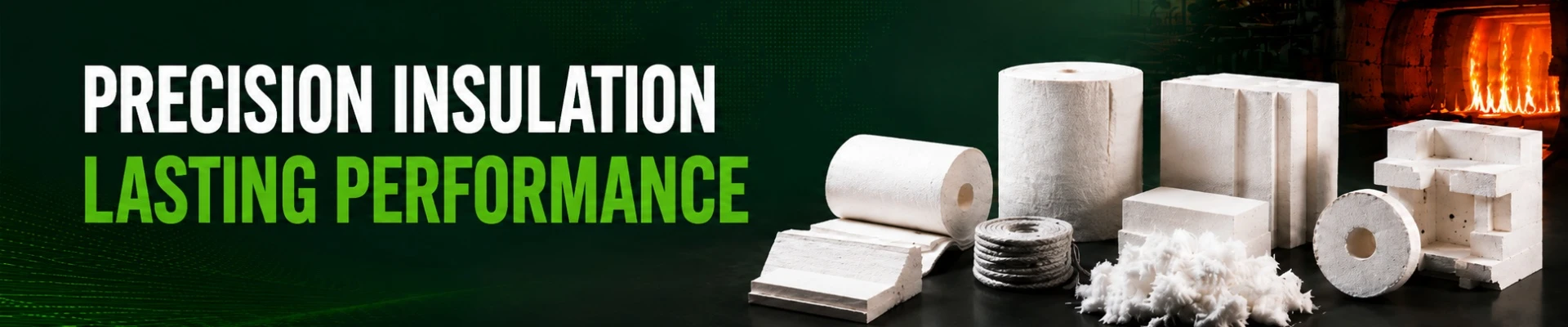
Different materials, different advantages, one goal: reliable performance in high-temperature environments.
Environmentally friendly ceramic fiber with excellent insulation performance and biosoluble characteristics.
High-performance polycrystalline fiber with service temperatures above 1400°C and outstanding chemical stability.
Excellent fire resistance and thermal insulation with outstanding cost performance.
Compare key performance indicators to select the best insulation solution.
| Performance Index |
AES Fiber (Alkaline Earth Silicate Fiber) |
PCW Fiber (Polycrystalline Wool) |
RCF Fiber (Refractory Ceramic Fiber) |
|---|---|---|---|
| Maximum Service Temperature | 1260°C | 1400°C | 1260°C |
| Linear Shrinkage (24h @1000°C) | ≤3% | ≤2% | ≤3% |
| Thermal Conductivity (800°C) | Low | Lower | Low |
| Chemical Stability | Good | Excellent | Good |
| Biopersistence | Low (Soluble) | Low | Non-soluble |
| Typical Composition (Al₂O₃ + SiO₂) | ≥96% | ≥99% | ≥96% |
| Key Advantages | Eco-friendly, Wide Application | Ultra-low Shrinkage, High Temperature Resistance | Stable Performance, Cost-effective |
| Recommended Applications | Environmental Protection, Fire Protection | High-temperature Furnace Insulation | Industrial Furnace Insulation |
Complete product forms available in AES, PCW, and RCF materials.